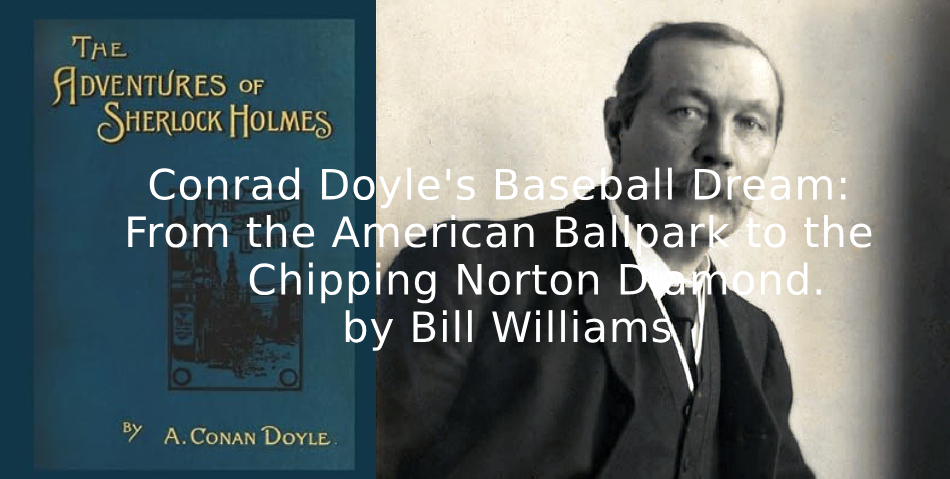
Sir Arthur Conan Doyle the creator of Sherlock Holmes, was a high- profile champion of baseball in Britain in the 1920’s and 1930’s.
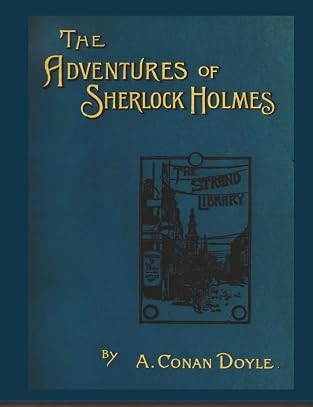
The Adventures of Sherlock Holmes published in 1892
Having watched the professional game in America and Canada before WWI, he introduced his children to the sport and became increasingly convinced that the game could flourish in the UK.
The first recorded game of ‘Bass-Ball’ in Britain took place in September 1749, however the 18th century game would have differed considerably from the organised game that he was promoting in the 1920’s.
In his 1924 book, ‘Our Second American Adventure’, Doyle described watching a baseball match in Winnipeg and praised the players’ fielding and throwing and concluded that it made an ‘excellent game for players and spectators!’
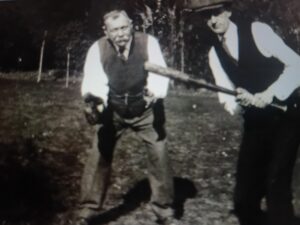
Sir Arthur Conan Doyle (left) playing baseball in Canada in 1914. Source: LancelynGreenCollection
Of course, he was not merely a novelist, he was a well-known public figure, former doctor, sportsman and serious cricketer, who famously dismissed the most famous cricketer of them all Dr W.G.Grace, while playing for the MCC against The London County in 1900.
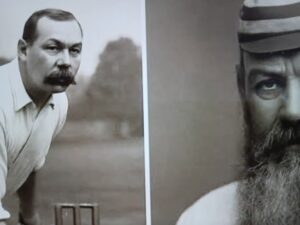
Doyle famously bowled out Dr W.G.Grace whilst playing for the MCC.
His celebrity status gave baseball something it had previously lacked- an exceptionally respectable advocate.
In 1922 while on tour in America, he publicly argued that the young people of Britain needed baseball and proposed introducing it through universities and colleges with teams playing one another and the results being published in British newspapers; two years later he became an even more prominent supporter.
Doyle wrote to The Times advocating the ‘Merits of baseball’ and stated that,
Here is a splendid game which calls for a fine eye, activity, bodily fitness and judgement in the highest degree!
He went on,
This game needs no expensive levelling of a field, its outfit is within the reach of any village club, it takes only two or three hours when playing, it is independent of wet wickets and the player is on his toes all the time and not sitting on a bench while another man makes a century.
He ended his letter by arguing that there was a place for it in the British sporting calendar:
It would no more interfere with cricket than lawn tennis has done and it would find its own place and what we need now is a central association which would advise and help the little clubs in the first year of their existence.
However, in 1924 British baseball had no single National Governing Body (NGB) and control was fragmented, particularly between the London-based organisations and the established authorities in England and Wales; in fact there had not been an NGB since 1912 and this would continue until 1933, when ‘The National Baseball Association’ was finally set up by the businessman Sir John Moores, to regulate the sport across the country.
Charlie Muirhead was the leading figure in London’s baseball scene and was involved in ‘The Anglo-American Baseball League’ formed in 1923 and Fred Lewis the founder and driving force behind baseball in the Oxfordshire Market town of Chipping Norton, had established connections with him; Muirhead had invited Lewis and his team to London in 1924, recognising that he had built one of the strongest independent baseball communities in England.
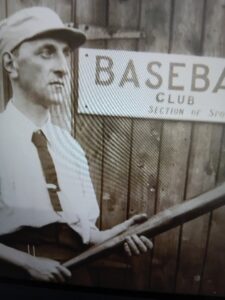
Fred Lewis founded Chipping Norton Baseball Club in 1920 Source: Chipping Norton Museum
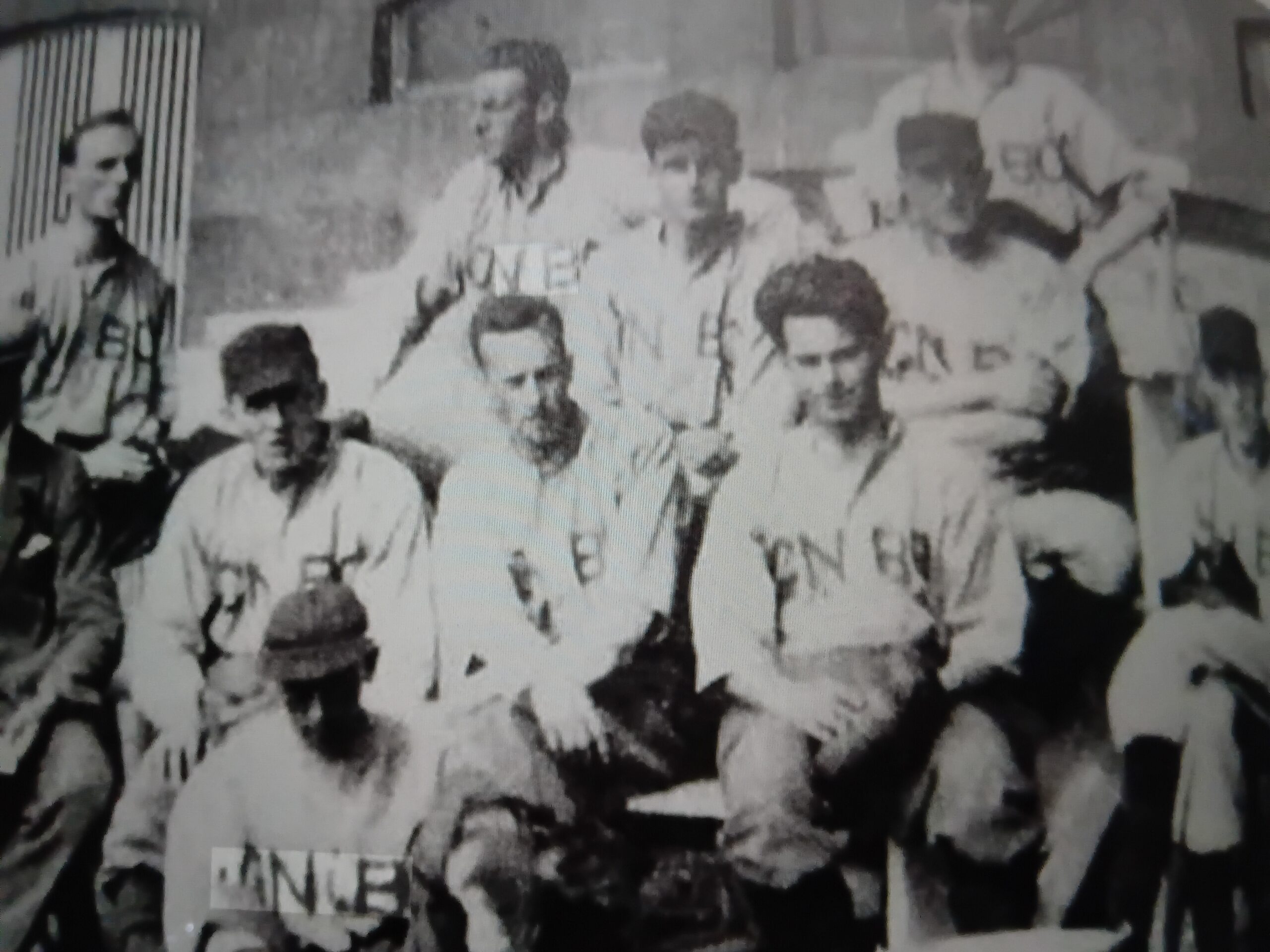
So much so that in 1926, The Daily Mail invited Chipping Norton to Stamford Bridge to play an ‘All-star’ team for what they described as ‘The British Championship’ and on reflection, there are three plausible reasons as to why.
Firstly, a rural club challenging an ‘All-star’ team offered an attractive narrative and the 13-12 victory by ‘the brawny Oxfordshire youths’ made the story even better.
Secondly, the London baseball scene was heavily influenced by the American and Canadian players and Chipping Norton offered something different – a team made up purely of ‘home-grown’ players with a sustained record of playing the game competitively, who were credible opponents.
Finally, The Anglo- American Baseball Association were looking to expand the sport and Chipping Norton was already playing outside its locality through their connections with Oxford University and some London clubs- inviting them showed that baseball was not just confined to the capital.
After the match Chipping Norton rightly considered themselves ‘British Champions’, but technically as there was no NGB for the sport, the 1926 victory was never officially recognised and recorded and it has taken until 2026 for the British Baseball Federation to finally accept them as champions!
Twelve months later, they were back defending their ‘title’, this time against St Joseph’s College from North London, as the return match gave the organisers a ready-made sporting narrative. Chipping Norton were again the victors 9-5, therefore successfully defending the ‘Daily Mail- associated Championship’.
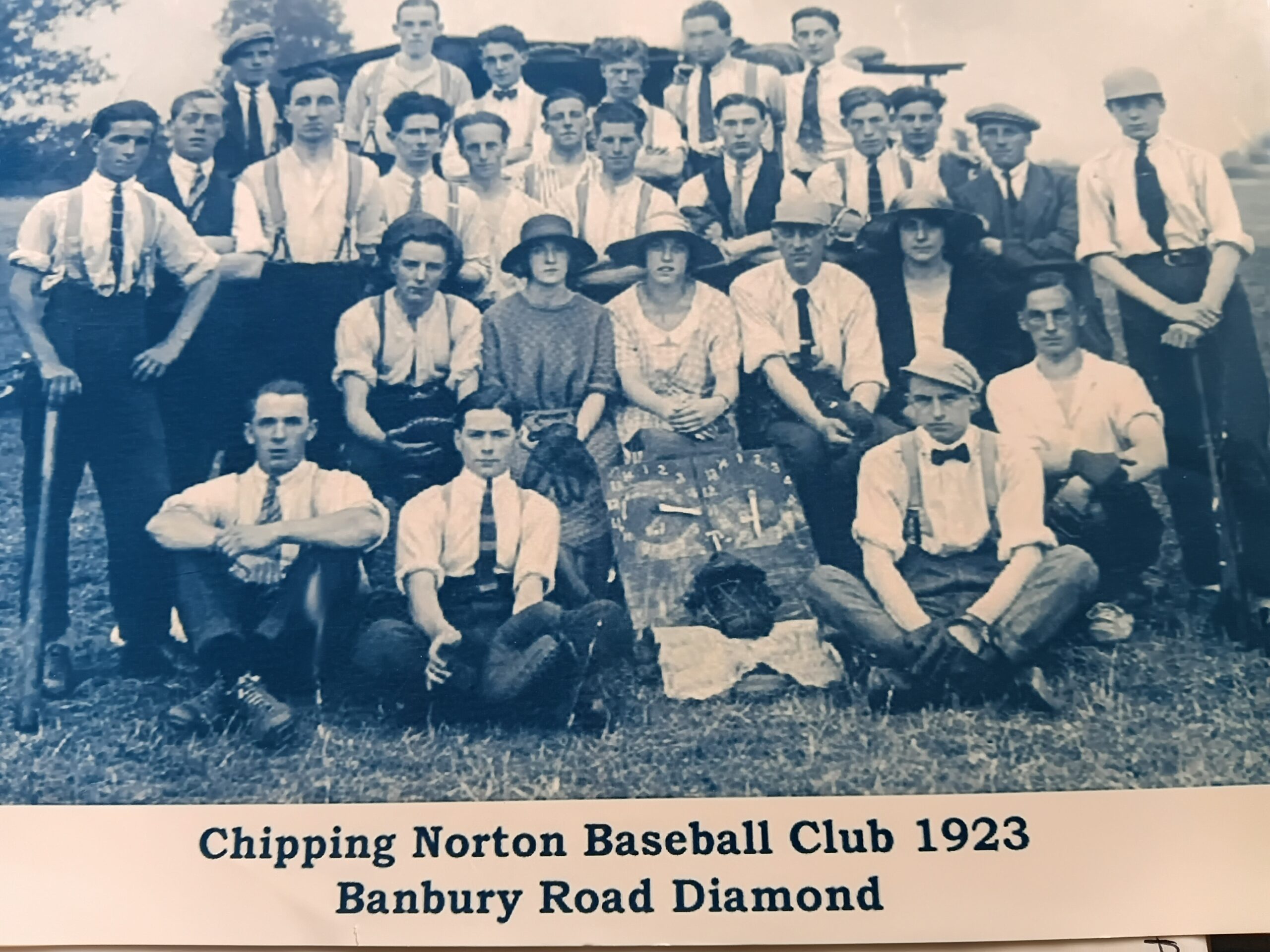
Chipping Norton Baseball Club continued playing for more than thirty years, developing junior and senior players from both sexes and at its peak, fielded five teams on a regular basis at ‘The Banbury Road Diamond’, reaching the National Juvenile Final in 1938 and ten years later were invited to play in an exhibition match at The White City Stadium as a fundraiser for The London Olympics.
-
-
The Banbury Road Diamond 1923
Source: Chipping Norton Museum
-
-
The British Champions of 1926
Source: Chipping Norton Museum
In 1960 Fred Lewis at the age of 81 died and sadly baseball was unable to continue without his leadership and guidance.
Its strength lay in the community-based approach taken by Fred Lewis and the club’s willingness to involve both sexes and different age groups, which is now synonymous with most sports clubs today.
The irony is that Doyle was a remarkably influential advocate who failed to achieve the result he predicted and it never displaced cricket or became a major sport in the UK.
His vision however, was alrready being realised at grassroots level in Chipping Norton and Fred Lewis’ club was remarkably close to the kind of organisation that Doyle was advocating in the 1920’s and he would have surely found the two victories as an encouraging illustration of the fact that baseball could succeed outside London.
Chipping Norton had proved that baseball could take root in an English community without a major American promoter directing its development.
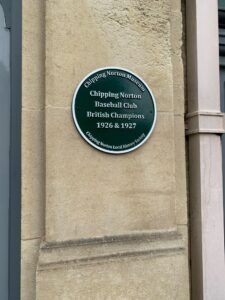
The commemorative plaque in Chipping Norton High Street
There is an intriguing possibility that Doyle encountered news of the club that fitted his vision of baseball flourishing in a small town and may have even visited Chipping Norton to meet Fred Lewis to see for himself….
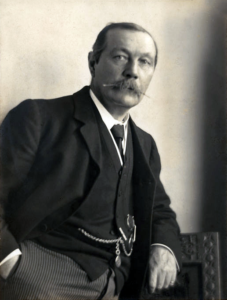
Sir Arthur Conran Doyle 1839-1930
Source: By Walter Benington – RR Auction, Public Domain
Article copyright of Bill Williams