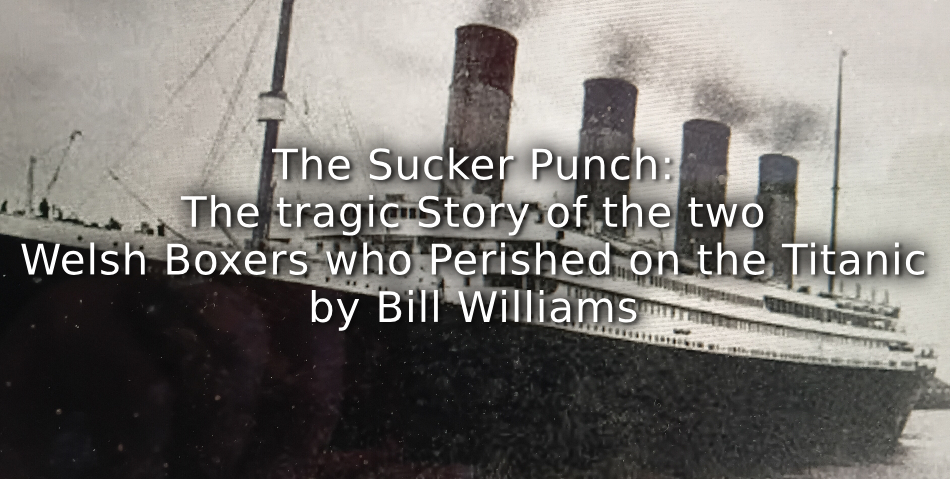
On April 15th 1912, after colliding with an iceberg in the North Atlantic, the Royal Mail Ship (RMS) Titanic flooded and broke apart.
The disaster resulted from high speeds in dangerous waters (around 22 knots), a failure to see the ice in time (no binoculars) and, crucially the iceberg opening five watertight compartments, which was one more than the ship could handle.
Over 1,500 people died when the ship sank in the early hours of the 15th, with most fatalities resulting from drowning or hypothermia in the freezing ocean.
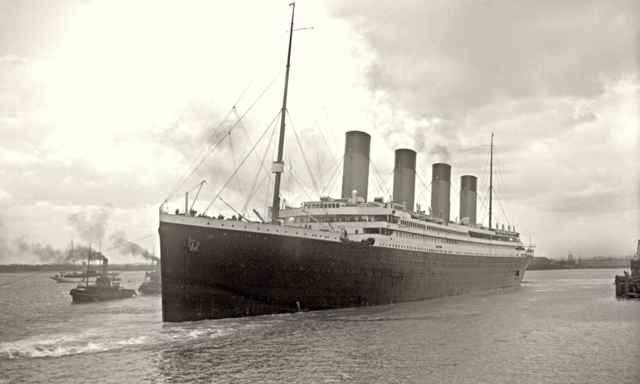
The RMS Titanic.
In 1912 it was the largest ship in the world and was considered to be ‘unsinkable!’
Image in the Public domain via Wikimedia Commons
Amongst the dead were two young Welshmen from the Rhondda Valley, boxers David (Dai) Bowen from Treherbert and Leslie (Les) Williams from Tonypandy, who were en- route to further their careers in Pennsylvania and had originally booked to travel on the ‘Lusitania’, but switched to the Titanic for a later departure.
Boxing was an immensely popular and an essential sport for young men in the South Wales valleys during the early 1900’s, often acting as a key route out of poverty; the region was a hotspot for talent, producing champions like Percy Jones, Cuthbert Taylor, Freddie Welsh, Jimmy Wilde, Tom Thomas, Bill Beynon and ‘Peerless’ Jim Driscoll, who dominated particularly in the lighter weight divisions, combining elite technical skills with an immense, hardened resilience born from the intense deprivation of the South Wales mining valleys.
‘Dai Bowen and Les Williams were just two hungry fighters of this era’, writes Dave Edwards in his excellent book ‘When a Dream Turned to Tragedy’(2023) ‘and both knew that their future was in their fists.’
Both men were products of Jack Scarrott’s ‘Boxing Booths’, where local miners and travellers fought professional boxers for money and were a crucial part of British boxing in that era, allowing fighters like Dai and Les to hone their skills against varied challengers.
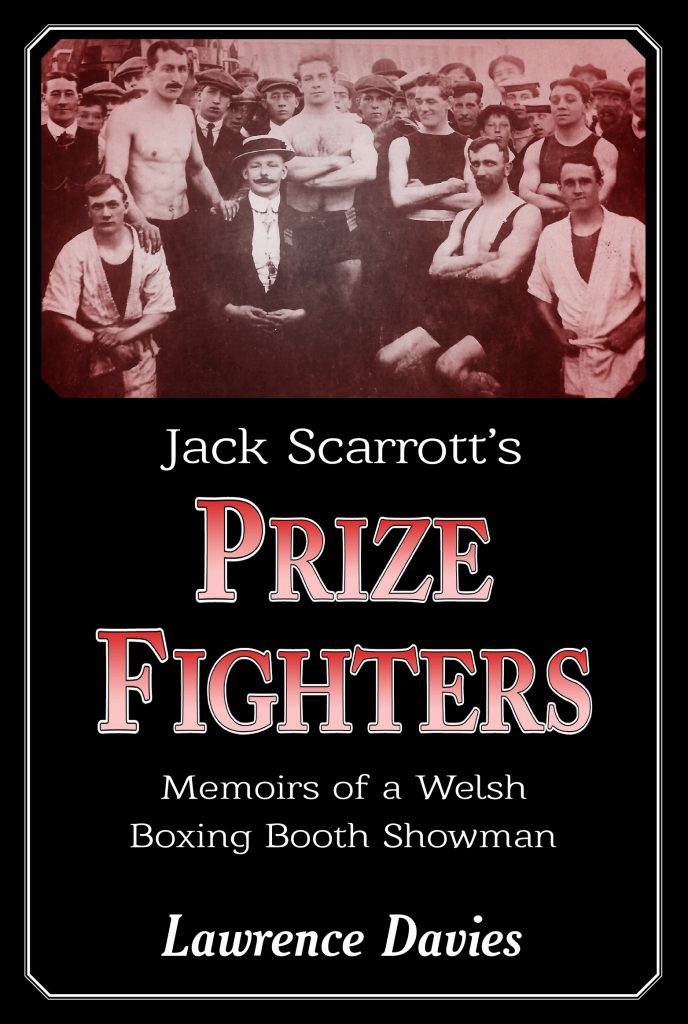
Jack Scarrot (centre) and members of his ‘Boxing Booth’
As illustrated on the front of Lawrence Davies’s bok on Welsh Prize Fighters
Booth fighters signed up for several months at a time and were given food and lodgings and a small wage, but the bulk of the earnings came from the money thrown into the ring referred to as ‘nobbings’, in appreciation of their performance.
The booth fighter was obliged to take on ‘all comers’, which meant that Dai Bowen and Les Willams, were often fighting men who were much older and heavier than them.
Boxing booths had been a feature of fairgrounds for over 200 years and were seen as a testing ground for many great British boxers, however by the 1950’s the authorities ruled that any licensed fighter was no longer allowed to box under these conditions and so the booths faded into obscurity; there are no active booths operating in the UK today.
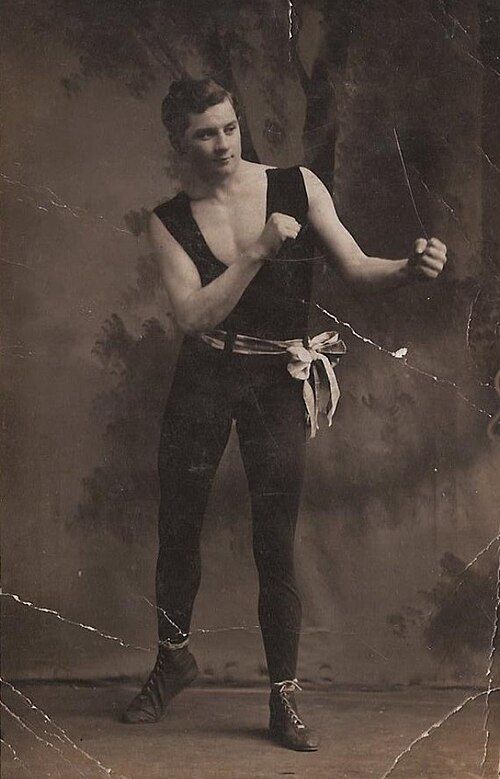
Dai Bowen, left the mines to become a boxer, becoming Welsh Amateur Lightweight Champion which encouraged him to start boxing on the British circuit where he was later trained by George Cundick and would have eight fights in his professional career, with his last bout on March 5th 1912 at Cardiff Park Hall.
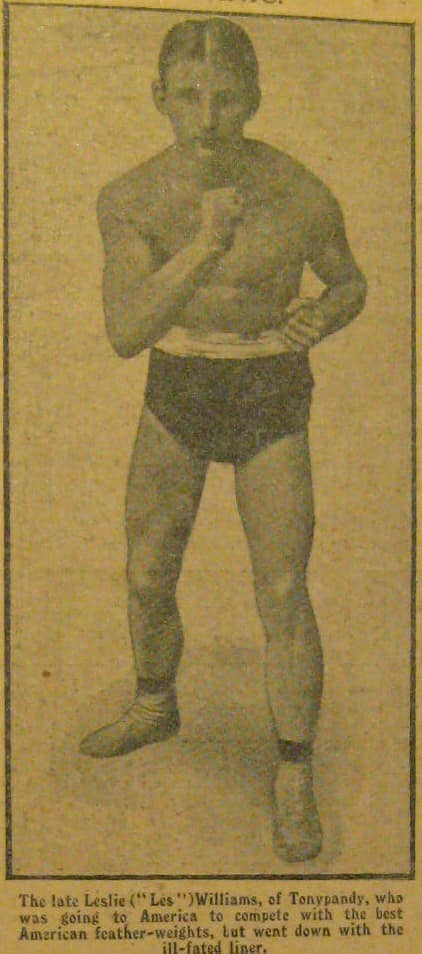
Les Williams originally a ‘blacksmith’s striker’, became a professional boxer and had 12 fights during his short career and was regarded as ‘a promising fighter’ before being chosen to visit America.
-
-
Dai Bowen
UserMartb1966, CC BY-SA 3.0 via Wikimedia Commons
-
-
Les Williams
Credit BNA
In 1911 American Boxing Promoter Frank Torreyson, had asked Welsh Boxing writer ‘Chas’ Barnett to recommend two young Welsh boxers for a series of American bouts and initially he had suggested Leslie Williams and Jimmy Wilde (but Jimmy was considered to be too small), so he chose Dai Bowen out of hundreds of potential contenders, being promised a year-long boxing opportunity.
Jimmy Wilde ‘The Mighty Atom’, who was deemed ‘too small’ to fight in America
Both men were booked on the ‘Lusitania’, but decided to switch to the ‘Titanic’, which had a later departure time, due to the fact that they were having new suits made.
Chas Barnett had booked the two friends onto the ship after Les Williams had contacted him:
‘He had called him to delay the crossing until such time as suits of clothes he had ordered were ready’, writes Dave Edwards, ‘Les told Barnett that such clothes were expensive in America.’
The price of their ticket (£8 1 shilling each) supposedly allowed them access to the ship’s gymnasium facilities, which they planned to use to prepare themselves for their American debuts, but being third- class passengers, they soon discovered that the gym was for the first -class only, so they were not allowed to use them.
Located at the bottom of the ship, third class cabins could sleep up to ten people and up to 700 passengers got to share two bathtubs, but they could have their own dances and parties and for many it was far removed from what they had experienced at home:
‘This is a lovely boat’, wrote Dai Bowen to his mother on April 11th, ‘She is like a floating palace.’
However, it has become apparent that serious issues existed for the ship throughout the day on April 14th and at least six messages regarding the potential threat of icebergs had been received, causing Captain Smith to alter his course slightly to the south, but warnings were also missed and when an iceberg was spotted just 30-40 seconds before the collision, roughly 400 miles off the coast of Newfoundland, it was too late and the ship sank approximately 2 hours and 40 minutes later.
Amongst the fist-class passengers was the world’s wealthiest man and estate mogul, John Jacob Astor IV, the American businessman Benjamin Guggenheim, Isador and Ida Straus co-owner of Macy’s Department store in New York and Archibald Butt who was the military aide to Presidents Taft and Roosevelt- all would perish.
Third class passengers like Dai and Les were one of the hardest hit groups and suffered a huge loss of life, with only 25% surviving compared with 62% in first class; it is believed to have been a result of ‘structural, logistical and social factors’, severely hindered by their inability to reach the lifeboats on the upper decks, resulting in over 700 deaths.
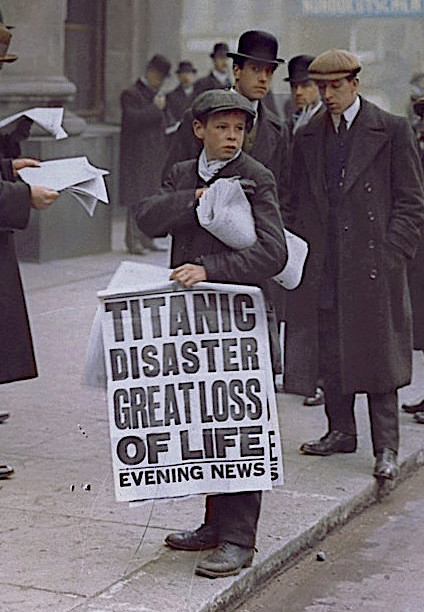
How the disaster was reported
Image in the Public domain via Wikimedia Commons
The body of Les Williams, who left a widow and young son was found, but was buried at sea rather than returned home, much to the dismay of his family. Dai Bowen’s body was never recovered.
Bodies buried at Sea
The ‘Rhondda Leader’ reported the tragic news under the headline, ‘Local Victims of Titanic Disaster’ and followed this by saying that, ‘the wreck of the Titanic has taken from our midst two prominent young men who were making huge steps in the world of boxing’.
For Jimmy Wilde, who had missed the crossing due to his size, he established himself as a dominant force becoming one of Britain’s most celebrated boxers, often considered ‘the greatest flyweight in history’ holding the world title between 1916 and 1923; the ‘Mighty Atom’ is remembered for his incredible punching power… despite his small stature.
The RMS Titanic sank on April 15th 1912
Article copyright of Bill Williams